Claims triage with document AI
An LLM pipeline that reads scanned and handwritten claim documents in French and English, extracts the fields adjusters need, and routes each case — with people reviewing exactly where the system is unsure.
- Client
- Atlantique Assurances
- Year
- 2026
- Timeline
- 5 months
- Languages
- French · English
- Model
- Human-in-the-loop
01
The challenge
Claims arrived as photos, scans and handwritten forms in two languages. Adjusters spent most of their time re-typing information before they could assess anything, and urgent claims waited in the same queue as routine ones.
02
Our approach
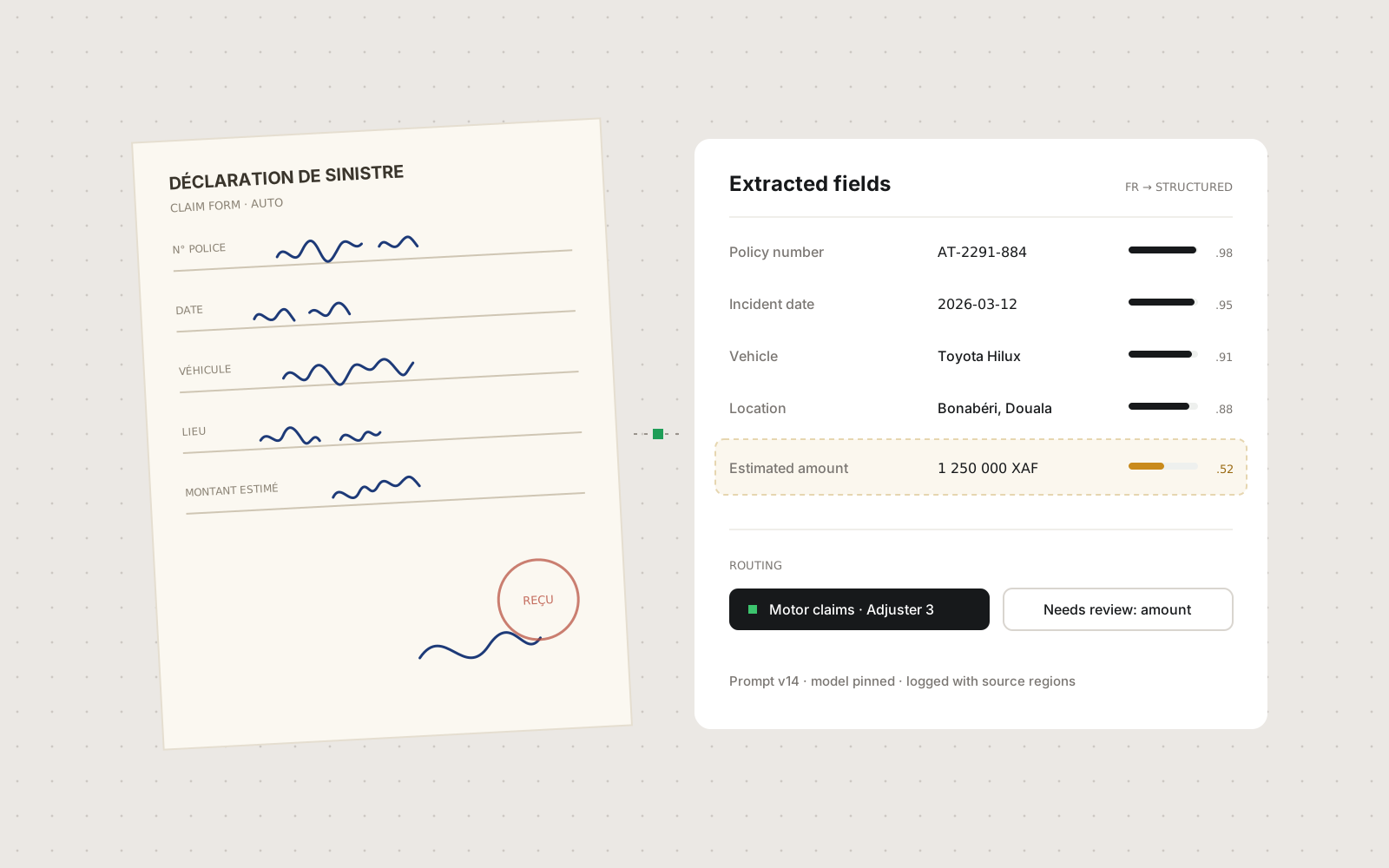
We built an evaluation set from anonymised historical claims before writing any prompts, and measured every change against it. Extraction returns schema-validated fields with confidence scores, or an explicit needs review result. Routing combines confidence with the size of the claim, so people review uncertain and high-value cases while routine ones flow straight through.
Every production decision is logged with the prompt and model version that made it, and reviewed failures become new evaluation cases each week.
03
The outcome
Adjusters now start from pre-filled, source-linked fields instead of blank forms. Urgent claims are identified on arrival. The review queue contains the cases that genuinely need a person.
What we did
- AI engineering
- Evaluation design
- Backend
- Workflow design
- Python
- LLMs
- OCR
- FastAPI
- PostgreSQL